
Moisturizer for dry skin
Textures, timing, and ingredients the AAD names.
Disclosure: We may earn a commission if you buy through links on this page. It does not change our guidance. Affiliate Disclosure
Cream or ointment
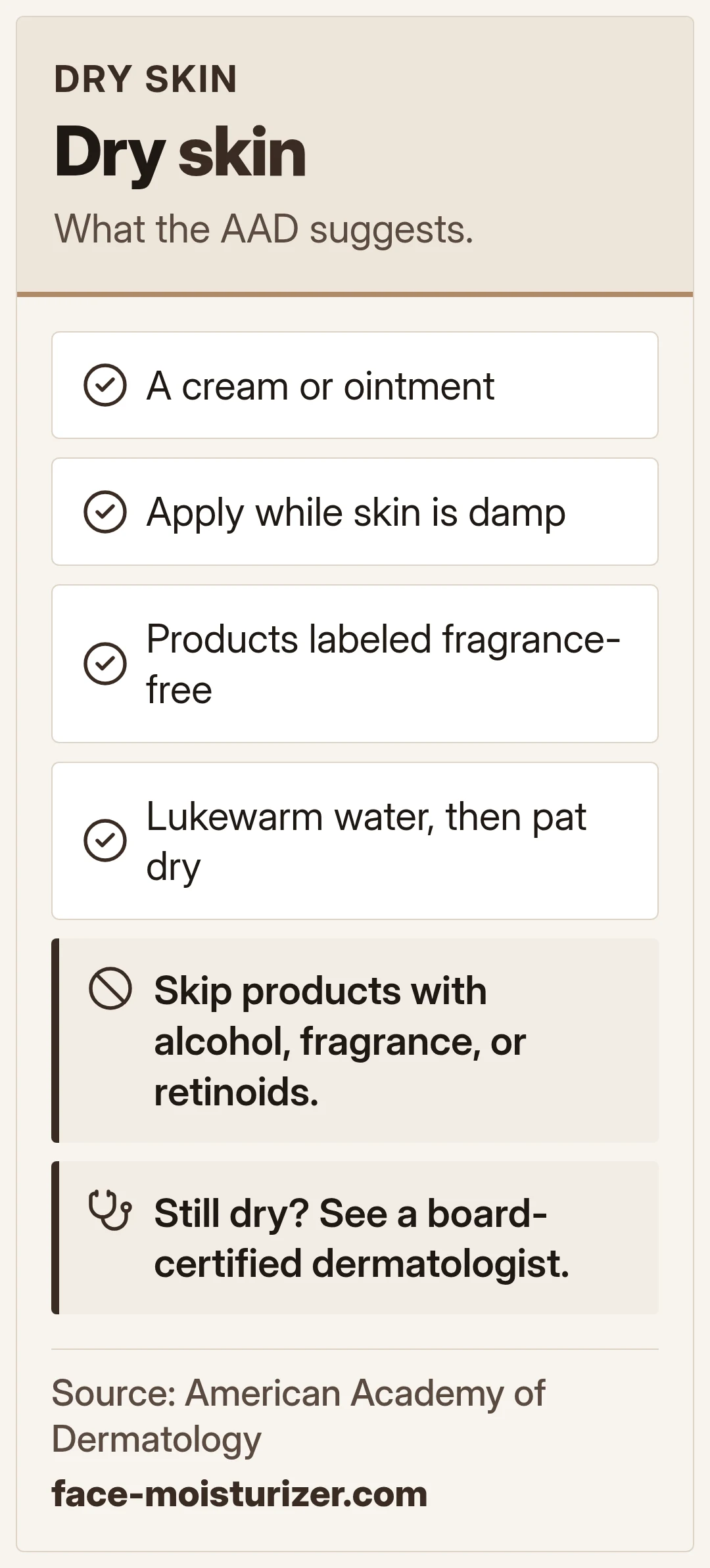
The AAD dry skin tips say ointments and creams add more moisture to skin and are more effective than lotions. A dermatologist quoted in the AAD moisturizer guide says someone with dry skin should start with a cream or ointment.
When to apply it
The AAD says to apply moisturizer when your skin is still damp after a shower or bath, after washing your hands, and when your skin feels dry, and to take time to gently massage it in. Its face washing tips say to apply moisturizer if your skin is dry or itchy.
Ingredients the AAD names
For dry skin, the AAD suggests a cream or ointment that contains one or more of these: jojoba oil, dimethicone, glycerin, hyaluronic acid, lactic acid, lanolin, mineral oil, petrolatum, or shea butter. We do not pick products that contain them.
What to skip
If you have dry skin, the AAD says to stop using skin care products that contain alcohol, fragrance, or retinoids. It says dermatologists recommend products labeled "fragrance-free," and that a product labeled "unscented" can contain chemicals that neutralize or hide the odors of other ingredients, which can irritate dry, sensitive skin.
Wash with care
The AAD face washing tips say to use a gentle, non-abrasive cleanser that does not contain alcohol, to use lukewarm water and your fingertips, and to pat dry with a soft towel.
When to see a dermatologist
The AAD says that if you continue to have dry skin after trying its tips, it is time to see a board-certified dermatologist, because your dry skin may be due to an underlying medical condition. A dermatologist quoted in the AAD moisturizer guide says to make an appointment if dryness becomes painful, cracked, bleeding, stinging, or very irritating.
FAQ
General information, not medical advice. Before you use a new skin care product on your face, the American Academy of Dermatology suggests testing it on a small spot of skin, such as the bend of your elbow, twice a day for seven to 10 days. If your skin reacts, wash the product off and do not use it again. Follow the directions and warnings on the label. See a doctor or dermatologist about a rash, a skin reaction that does not go away, or any skin condition. If you have signs of a severe allergic reaction, such as shortness of breath or trouble swallowing, call 911.
Next: humectants, emollients, occlusives
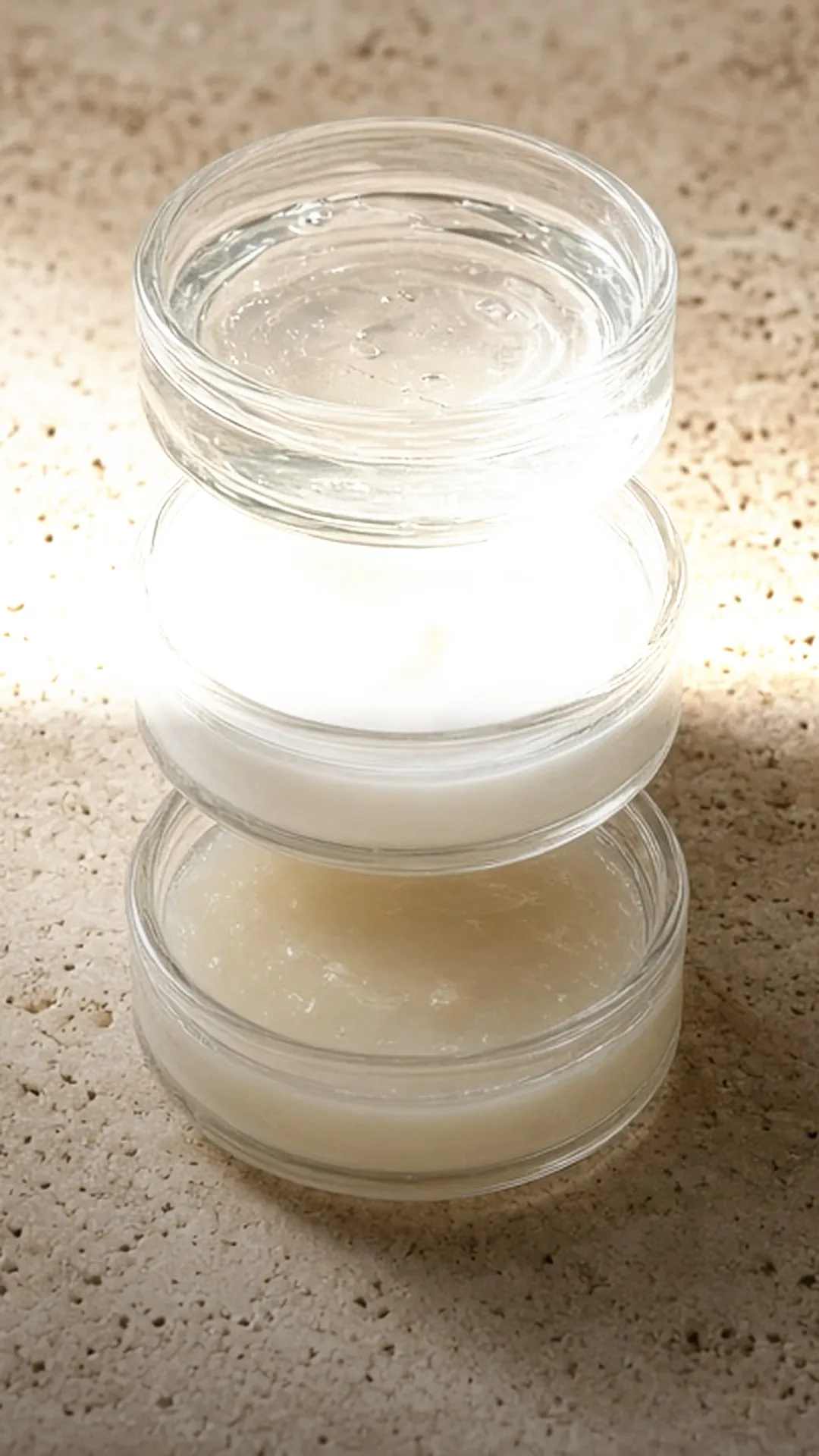
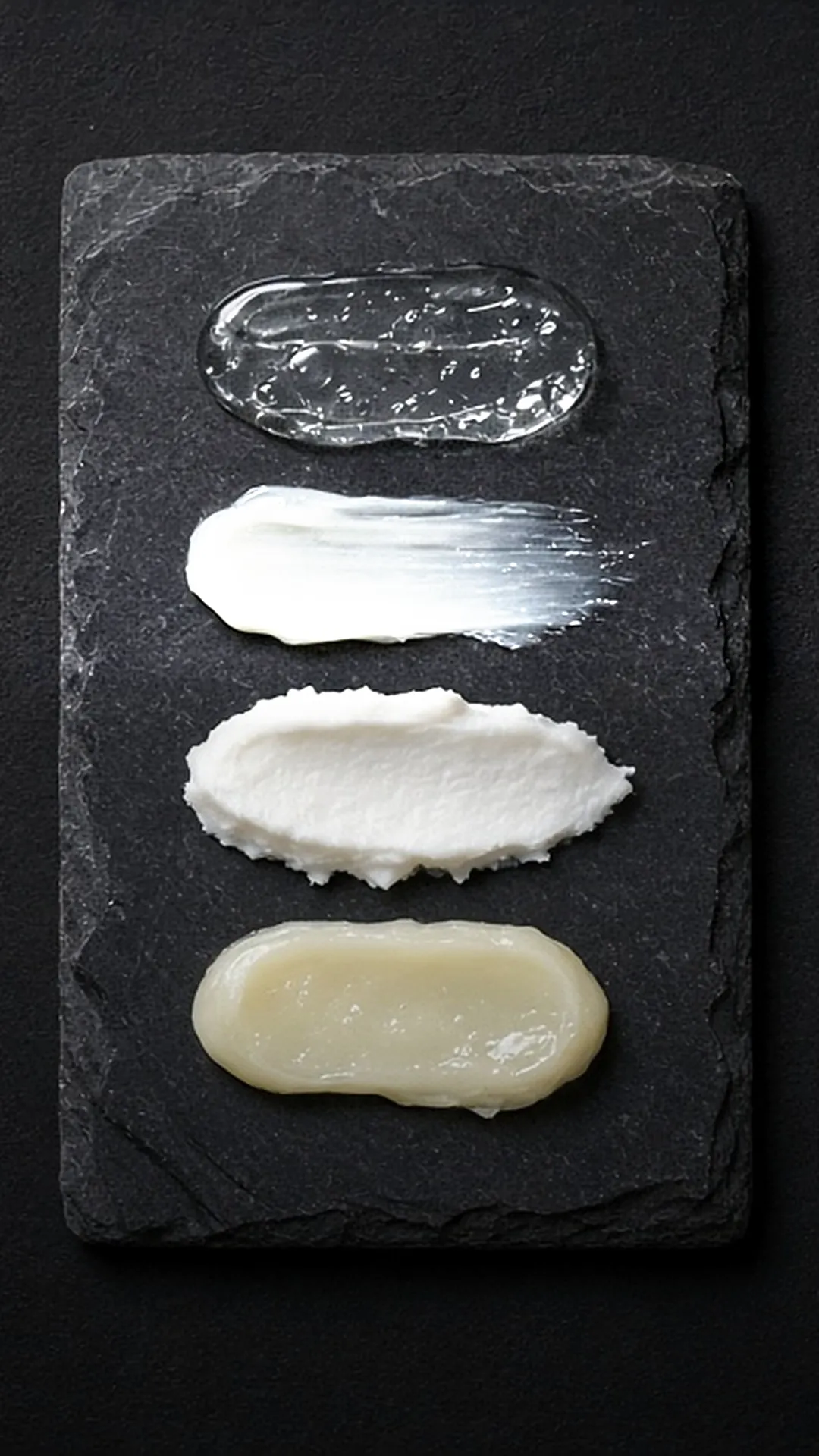
Three jobs, three names.
