
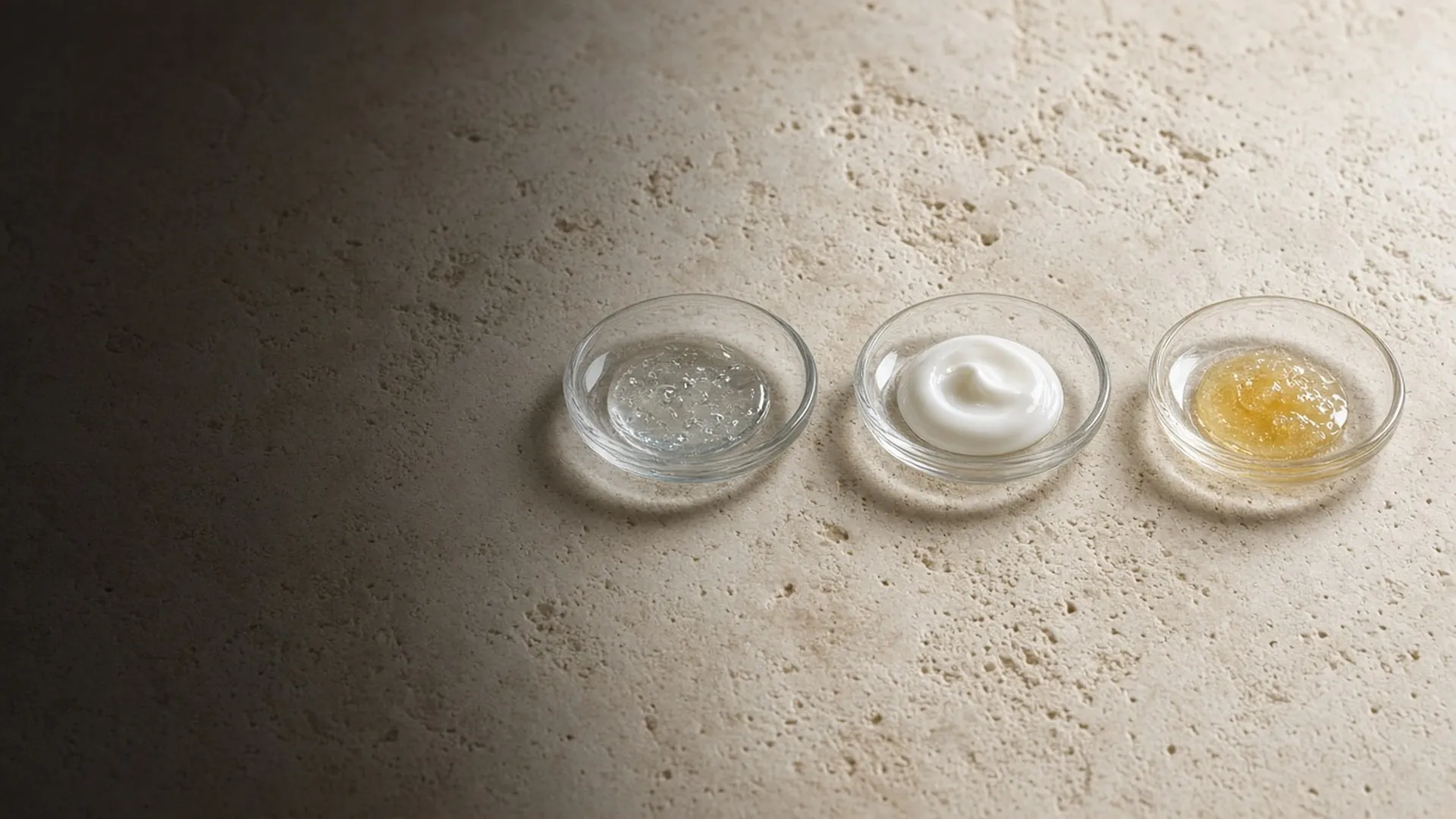
Humectants, emollients, and occlusives
Three jobs moisturizer ingredients do.
Disclosure: We may earn a commission if you buy through links on this page. It does not change our guidance. Affiliate Disclosure
What a moisturizer does
The AAD moisturizer guide says moisturizer works by putting moisture into the skin and preventing water from leaving it. A 2020 AAD guidance document on skin care for health care workers says "almost all topical moisturizing products available on the market contain a combination of emollients, occlusive ingredients, and humectants."
Humectants
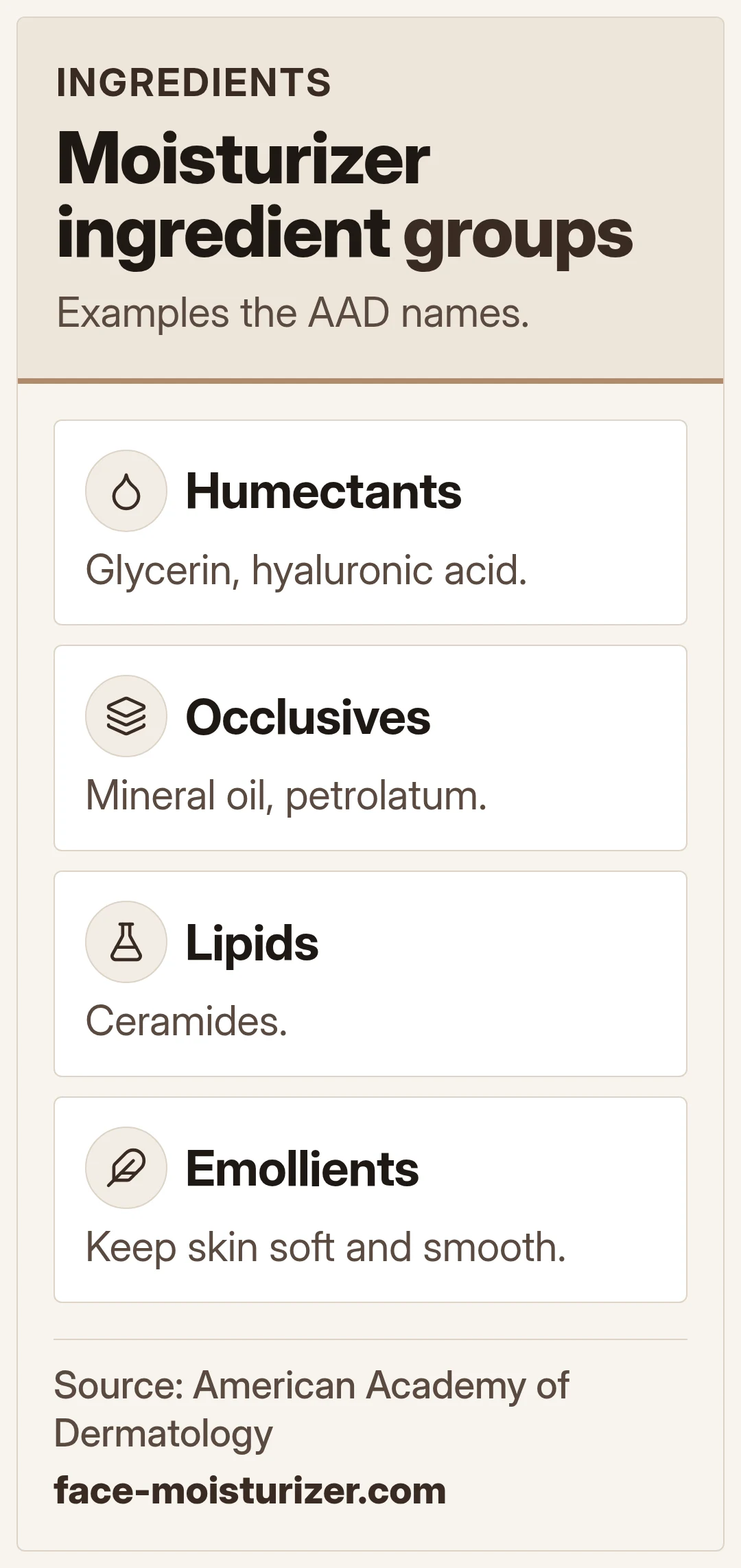
A humectant is an ingredient that draws in and holds water. The AAD names glycerin and hyaluronic acid as humectants.
Emollients
An emollient is an ingredient that softens the skin. The AAD moisturizer guide says emollients in moisturizers keep your skin soft and smooth.
Occlusives
An occlusive is an ingredient that forms a layer on the skin to hold water in. The AAD names mineral oil and petrolatum as occlusives.
Lipids like ceramides
The AAD lists lipids, such as ceramides, as their own group alongside humectants and occlusives. Our ceramides guide covers them.
Finding them on the label
The FDA says cosmetic ingredients must be declared in descending order of predominance, and that ingredients at one percent or less may be listed in any order. The list gives names, not amounts.
Sources: AAD, 4 skin care tips for your hands; American Academy of Dermatology (AAD), How to pick the right moisturizer for your skin; AAD, Preventing and treating occupationally induced dermatologic conditions during COVID-19 (PDF, 2020, for health care workers); FDA, Summary of Cosmetics Labeling Requirements.
FAQ
General information, not medical advice. Before you use a new skin care product on your face, the American Academy of Dermatology suggests testing it on a small spot of skin, such as the bend of your elbow, twice a day for seven to 10 days. If your skin reacts, wash the product off and do not use it again. Follow the directions and warnings on the label. See a doctor or dermatologist about a rash, a skin reaction that does not go away, or any skin condition. If you have signs of a severe allergic reaction, such as shortness of breath or trouble swallowing, call 911.


Next: hyaluronic acid
A humectant, explained.
