
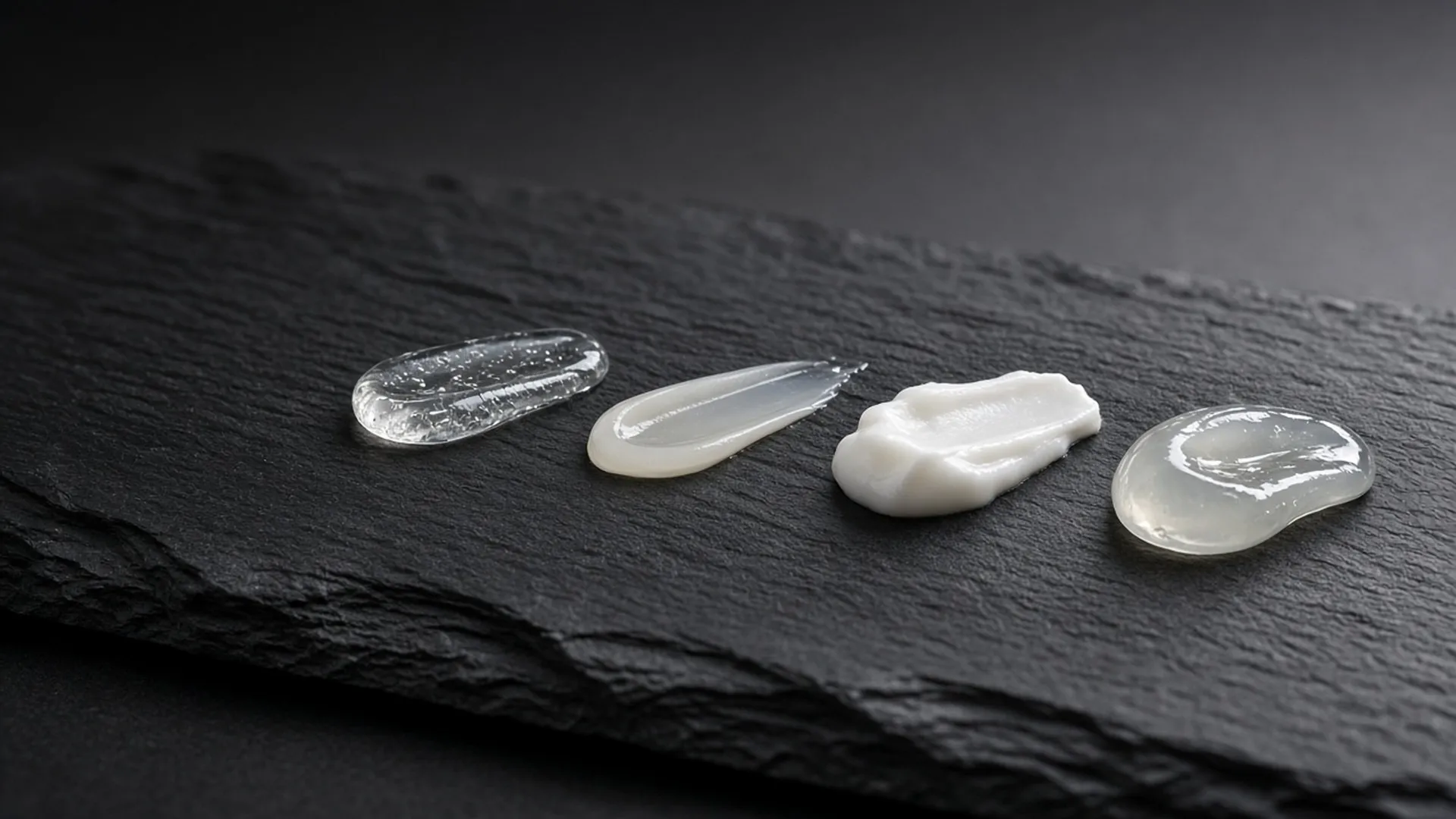
Lotion, cream, gel, and ointment
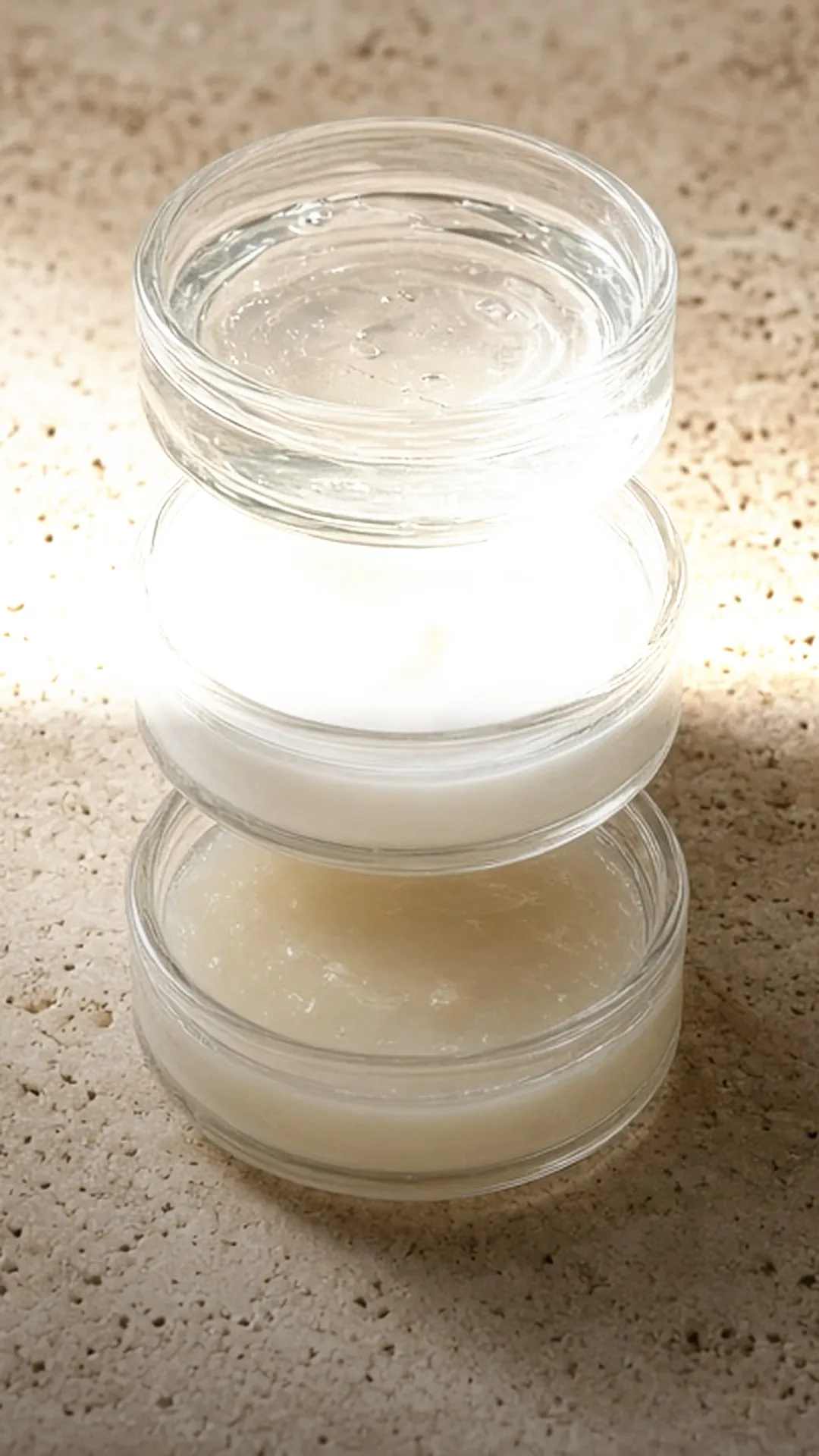
Four textures, from lightest to thickest.
Disclosure: We may earn a commission if you buy through links on this page. It does not change our guidance. Affiliate Disclosure
Gel
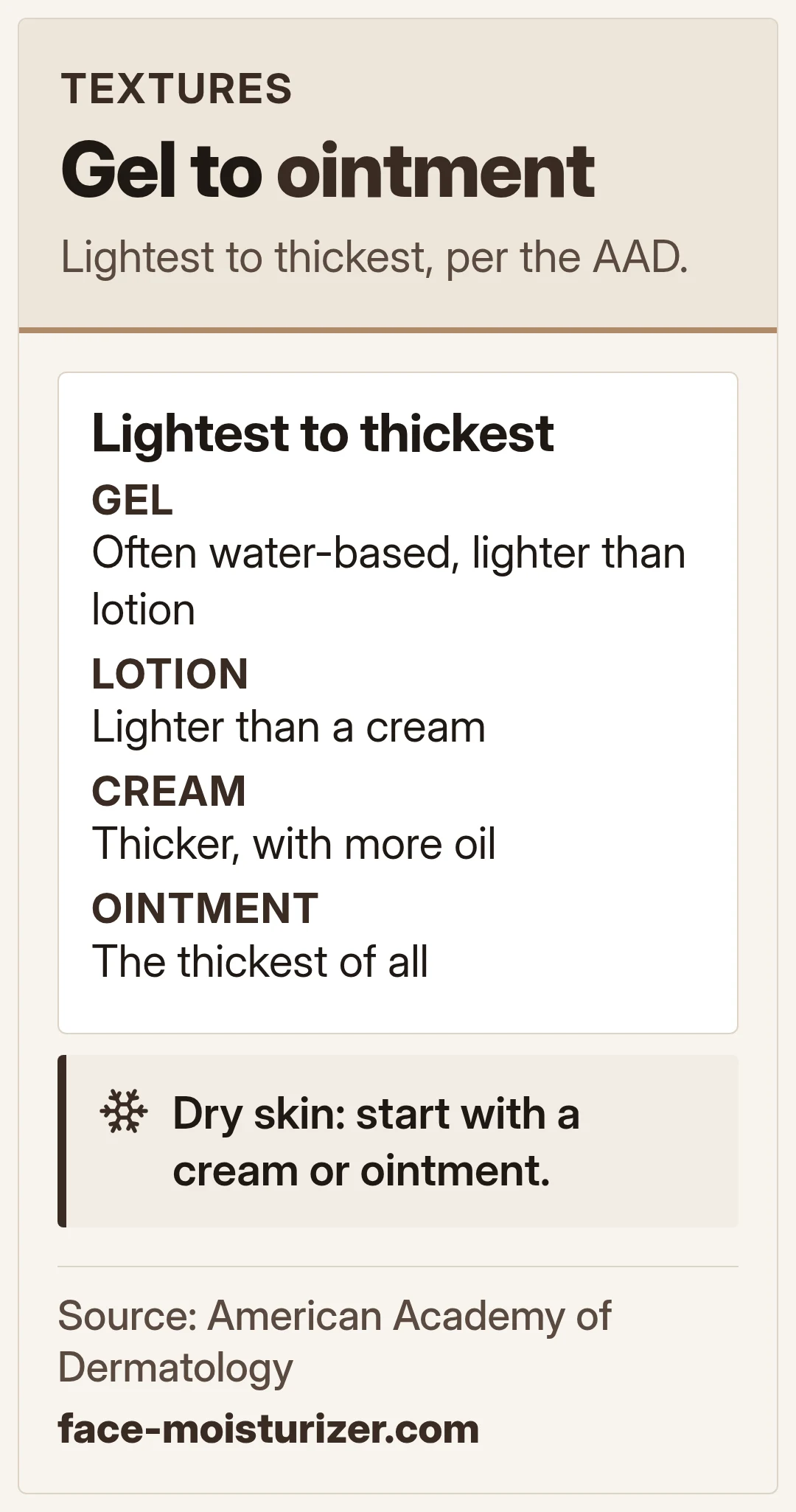
The AAD moisturizer guide says "a gel is often water-based and tends to feel lighter on the skin than a lotion." A dermatologist quoted in the guide suggests a gel for oily skin.
Lotion
A dermatologist quoted in the AAD guide says lotion is sufficient for most younger people with seasonal dryness in otherwise normal skin.
Cream
The AAD guide says a cream is thicker and has higher oil content than a lotion and gel, "making it more hydrating." Another dermatologist quoted in the guide says perimenopausal people and everyone 50 and older should be using a cream-based moisturizer.
Ointment
The AAD guide says "an ointment is the thickest of all, making it the most effective in remedying dry skin."
Gel cream
"Gel cream" is a label term. We have found no agency definition for it, so read the ingredient list and the maker's description.
Which one for your skin?
The AAD dry skin tips say ointments and creams add more moisture to skin and are more effective than lotions. The AAD guide says the choice depends on your skin type.
FAQ
General information, not medical advice. Before you use a new skin care product on your face, the American Academy of Dermatology suggests testing it on a small spot of skin, such as the bend of your elbow, twice a day for seven to 10 days. If your skin reacts, wash the product off and do not use it again. Follow the directions and warnings on the label. See a doctor or dermatologist about a rash, a skin reaction that does not go away, or any skin condition. If you have signs of a severe allergic reaction, such as shortness of breath or trouble swallowing, call 911.
Next: skin types
Normal, dry, oily, combination.
