
How to test a new moisturizer
The at-home test the AAD describes.
Disclosure: We may earn a commission if you buy through links on this page. It does not change our guidance. Affiliate Disclosure
The at-home test
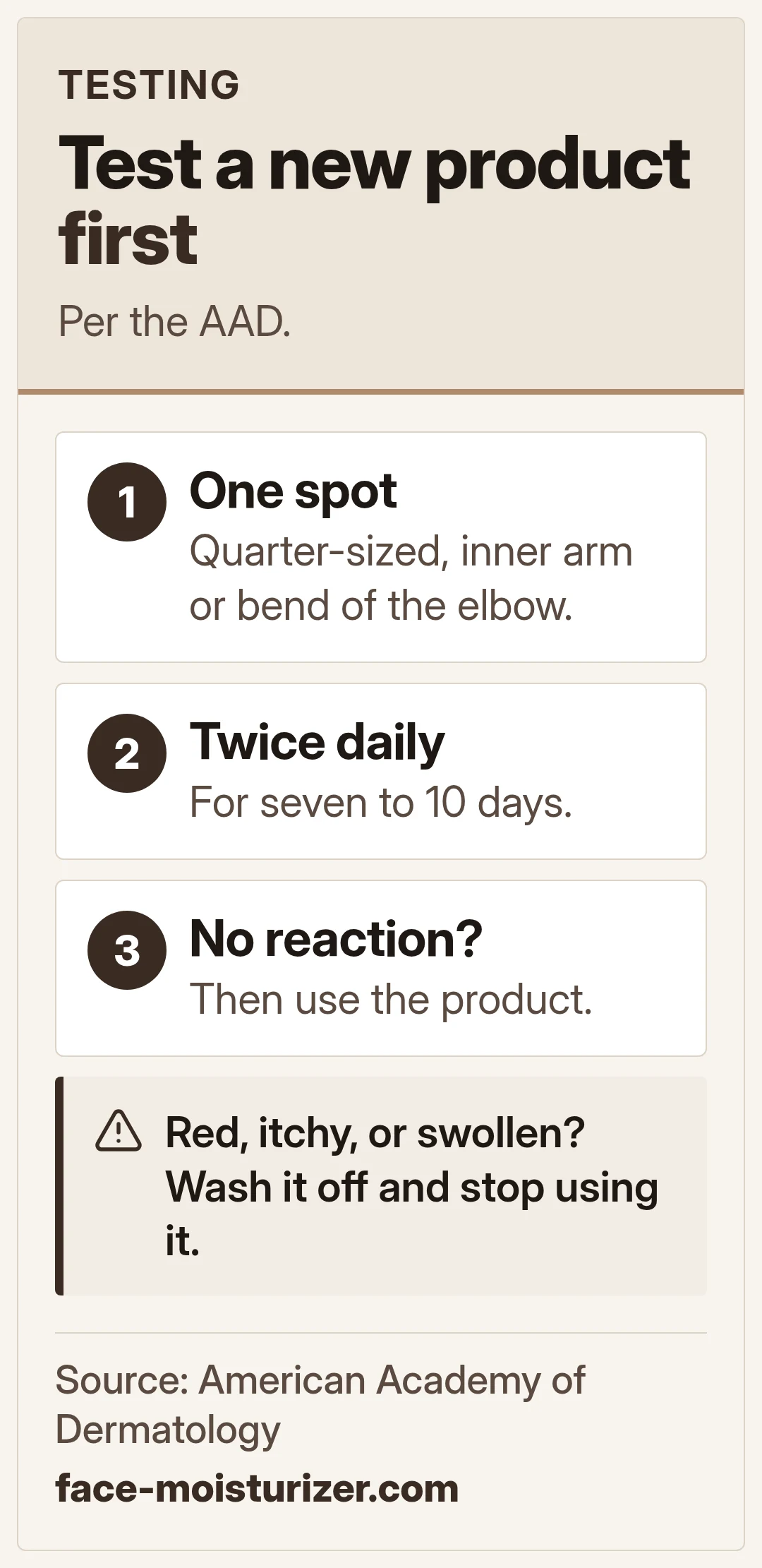
The AAD says to apply the product to a test spot twice daily for seven to 10 days, on a quarter-sized area where it won't be rubbed or washed away, such as the underside of your arm or the bend of your elbow.
Use it as you normally would
The AAD says to apply the product as you normally would. For something you would wash off, like a cleanser, it says to keep it on your skin for five minutes or as long as the instructions say.
If there is no reaction
The AAD says that if you have no reaction, such as red, itchy, or swollen skin, after seven to 10 days, you can use the product.
If you react
The AAD says to gently wash the product off as soon as possible and not use it again. It says a cool compress or petroleum jelly can relieve your skin, and that if your reaction is severe and not relieved, you may need to see a dermatologist.
At-home test vs patch testing
The AAD uses "patch testing" for a medical test a dermatologist can do to find what is causing a reaction. The FDA says this test places a small amount of allergen on the skin and covers it for 48 hours, and a physician inspects the skin after 72 to 96 hours.
Read the label too
The FDA says reading the label is important because some products contain ingredients that may cause irritation regardless of whether you have allergies, and to follow the maker's instructions.
FAQ
General information, not medical advice. Before you use a new skin care product on your face, the American Academy of Dermatology suggests testing it on a small spot of skin, such as the bend of your elbow, twice a day for seven to 10 days. If your skin reacts, wash the product off and do not use it again. Follow the directions and warnings on the label. See a doctor or dermatologist about a rash, a skin reaction that does not go away, or any skin condition. If you have signs of a severe allergic reaction, such as shortness of breath or trouble swallowing, call 911.
Next: sensitive skin
Fragrance, labels, testing.
