
Fragrance-free vs unscented
Two label words that mean different things.
Disclosure: We may earn a commission if you buy through links on this page. It does not change our guidance. Affiliate Disclosure
"Unscented" can still contain fragrance
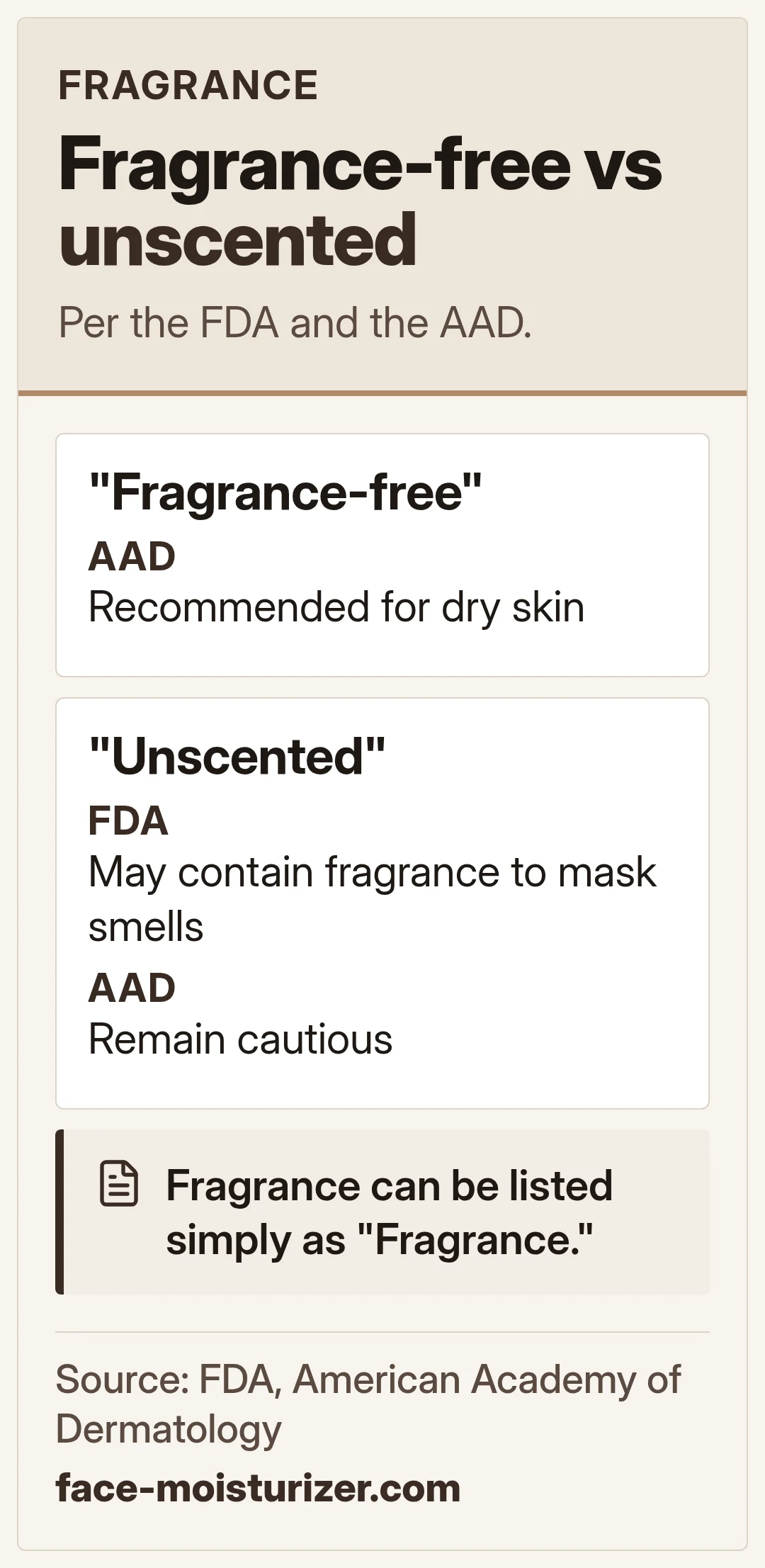
The FDA says even some products labeled "unscented" may contain fragrance ingredients, because the maker may add just enough fragrance to mask the smell of other ingredients. The AAD says "unscented" products can contain chemicals that neutralize or hide the odors of other ingredients.
What the AAD suggests
The AAD recommends products labeled "fragrance-free" for dry skin. If fragrance makes your skin react, it says to opt for products labeled "fragrance free" and to remain cautious with products labeled "unscented" or with plant-based botanical ingredients.
How fragrance is listed
The FDA says that under U.S. regulations, fragrance ingredients can be listed simply as "Fragrance." It says fragrance formulas are complex mixtures, and are the kinds of cosmetic components most likely to be trade secrets.
Fragrance and allergies
The FDA says some fragrance components may cause allergic reactions or sensitivities for some people, and that it does not have the same legal authority to require allergen labeling for cosmetics as for food.
Plant oils are ingredients too
The FDA says there is no regulatory definition for "essential oils," and that the law treats ingredients from plants the same as those from any other source.
FAQ
General information, not medical advice. Before you use a new skin care product on your face, the American Academy of Dermatology suggests testing it on a small spot of skin, such as the bend of your elbow, twice a day for seven to 10 days. If your skin reacts, wash the product off and do not use it again. Follow the directions and warnings on the label. See a doctor or dermatologist about a rash, a skin reaction that does not go away, or any skin condition. If you have signs of a severe allergic reaction, such as shortness of breath or trouble swallowing, call 911.
Next: sensitive skin
Fragrance, labels, testing.
