

Sunscreen on your face
How much, when, and how long it lasts.
Disclosure: We may earn a commission if you buy through links on this page. It does not change our guidance. Affiliate Disclosure
How much
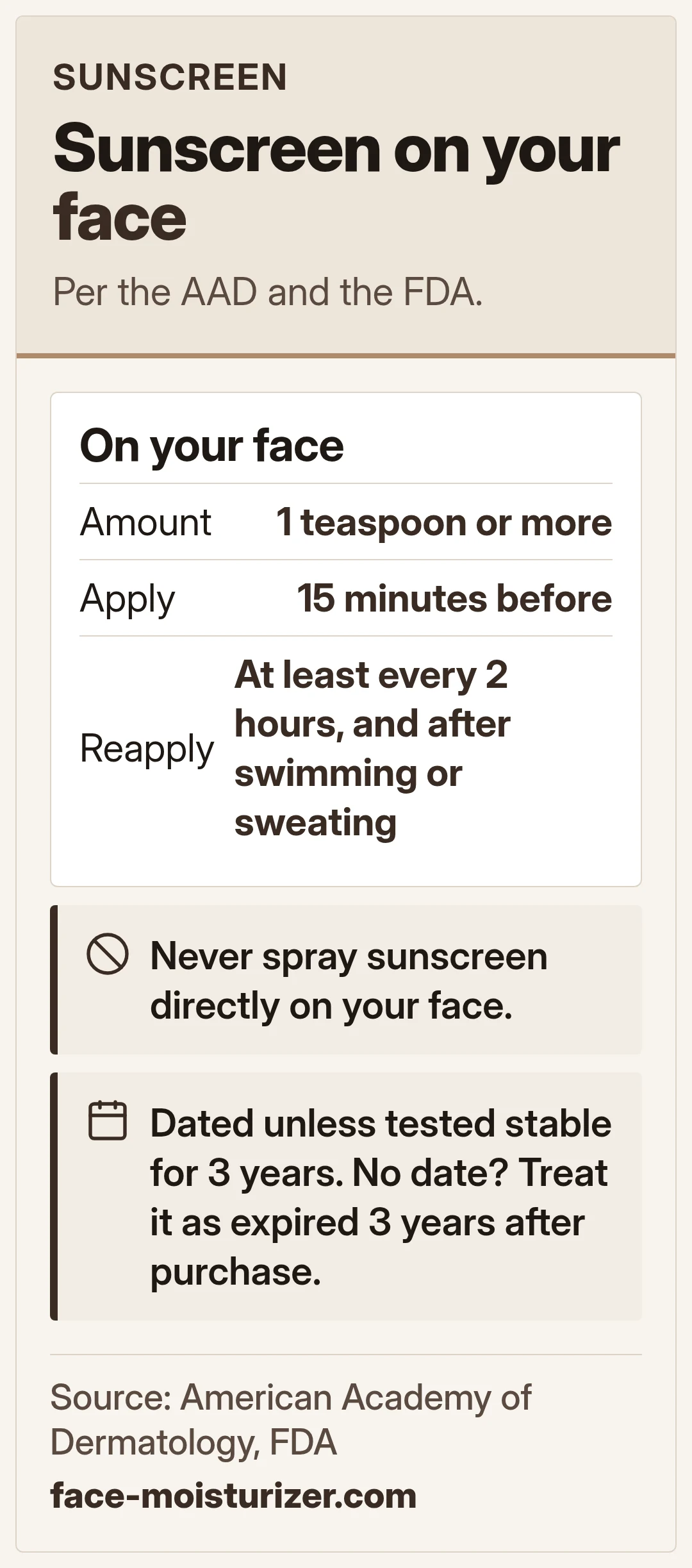
When applying sunscreen to your face, the AAD says to "use at least 1 teaspoon (about the amount needed to cover the length of your index and middle fingers)."
When to apply
The AAD says it takes approximately 15 minutes for your skin to absorb sunscreen and protect you. The FDA says to apply sunscreen 15 minutes before sun exposure, avoiding the eyes and mouth.
Reapply
The AAD says to reapply sunscreen every two hours when outdoors, and immediately after swimming or sweating. The FDA says to reapply at least every two hours, and more often if you are swimming or sweating.
Spots people miss
The FDA lists the ears, nose, lips, and back of the neck among frequently forgotten spots. The AAD says to protect your lips with a lip balm with an SPF of at least 30.
Sprays and the face
The FDA says spray sunscreens should never be applied directly to your face, and that this is one reason to always read the label before using a sunscreen.
Does sunscreen expire?
The FDA says nonprescription drugs, including sunscreens, must have an expiration date unless the maker's stability testing has shown the product will remain stable for at least three years. It says a sunscreen that does not have an expiration date should be considered expired three years after purchase. It says to discard expired sunscreen, and to discard it if you do not know how old it is.
FAQ
General information, not medical advice. Before you use a new skin care product on your face, the American Academy of Dermatology suggests testing it on a small spot of skin, such as the bend of your elbow, twice a day for seven to 10 days. If your skin reacts, wash the product off and do not use it again. Follow the directions and warnings on the label. See a doctor or dermatologist about a rash, a skin reaction that does not go away, or any skin condition. If you have signs of a severe allergic reaction, such as shortness of breath or trouble swallowing, call 911.
The FDA says moisturizers and makeup marketed with sun-protection claims are both cosmetics and drugs. Follow the directions and warnings on the product's Drug Facts label. The FDA says to ask a doctor before applying sunscreen to children under six months of age.

Next: SPF and broad spectrum
The numbers and the words.
