
SPF and broad spectrum, explained
What the numbers and words on a sunscreen label mean.
Disclosure: We may earn a commission if you buy through links on this page. It does not change our guidance. Affiliate Disclosure
What SPF measures
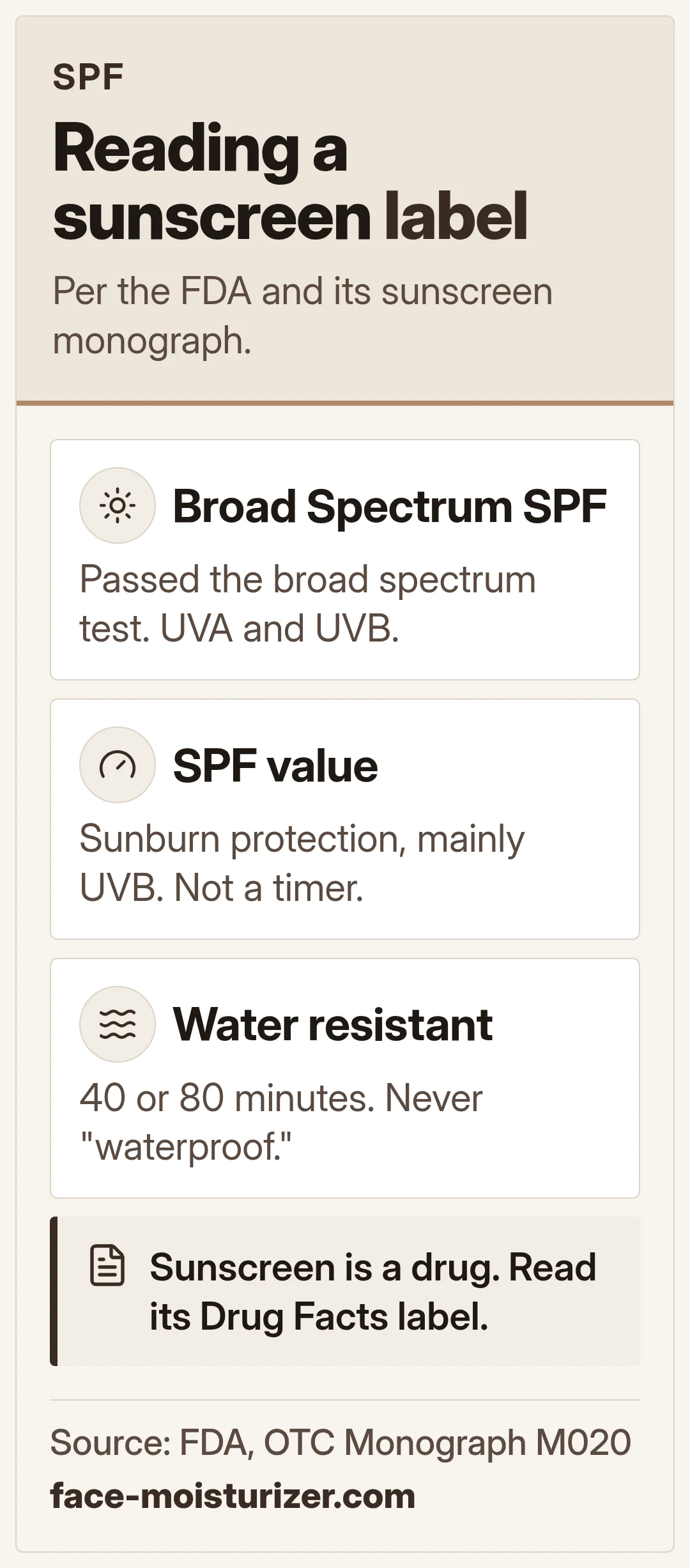
The FDA says the SPF value indicates the level of sunburn protection a sunscreen gives, and that SPF values primarily indicate a sunscreen's UVB protection.
SPF is not a timer
The FDA says SPF is not directly related to time of solar exposure but to amount of solar exposure. It says the belief that SPF 15 lets you stay in the sun 15 times longer without burning is not true.
Broad spectrum
The FDA says broad spectrum sunscreens help protect against both UVA and UVB radiation, and that not all sunscreens are broad spectrum. Under the monograph, only products that pass the broad spectrum test may say "Broad Spectrum SPF."
SPF 30 vs 50
The FDA says "higher SPF values (up to 50) provide greater sunburn protection," and to choose a broad-spectrum sunscreen with an SPF of at least 15. The AAD recommends SPF 30 or higher.
Water resistant, not waterproof
The FDA says no sunscreens are "waterproof," and that products labeled water resistant must state whether they remain effective for 40 minutes or 80 minutes when swimming or sweating. The monograph says "sunblock," "sweatproof," and "waterproof" claims make a product misbranded.
The skin cancer alert
The FDA says sunscreens that are not broad spectrum, or that lack an SPF of at least 15, must carry a Skin Cancer/Skin Aging Alert that says the product "has been shown only to help prevent sunburn, not skin cancer or early skin aging."
FAQ
General information, not medical advice. Before you use a new skin care product on your face, the American Academy of Dermatology suggests testing it on a small spot of skin, such as the bend of your elbow, twice a day for seven to 10 days. If your skin reacts, wash the product off and do not use it again. Follow the directions and warnings on the label. See a doctor or dermatologist about a rash, a skin reaction that does not go away, or any skin condition. If you have signs of a severe allergic reaction, such as shortness of breath or trouble swallowing, call 911.
The FDA says moisturizers and makeup marketed with sun-protection claims are both cosmetics and drugs. Follow the directions and warnings on the product's Drug Facts label. The FDA says to ask a doctor before applying sunscreen to children under six months of age.



Next: moisturizer with SPF
A cosmetic and a drug.
