
Moisturizer for oily skin
Why oily skin still gets moisturizer, and the labels the AAD names.
Disclosure: We may earn a commission if you buy through links on this page. It does not change our guidance. Affiliate Disclosure
Oily skin still gets moisturizer
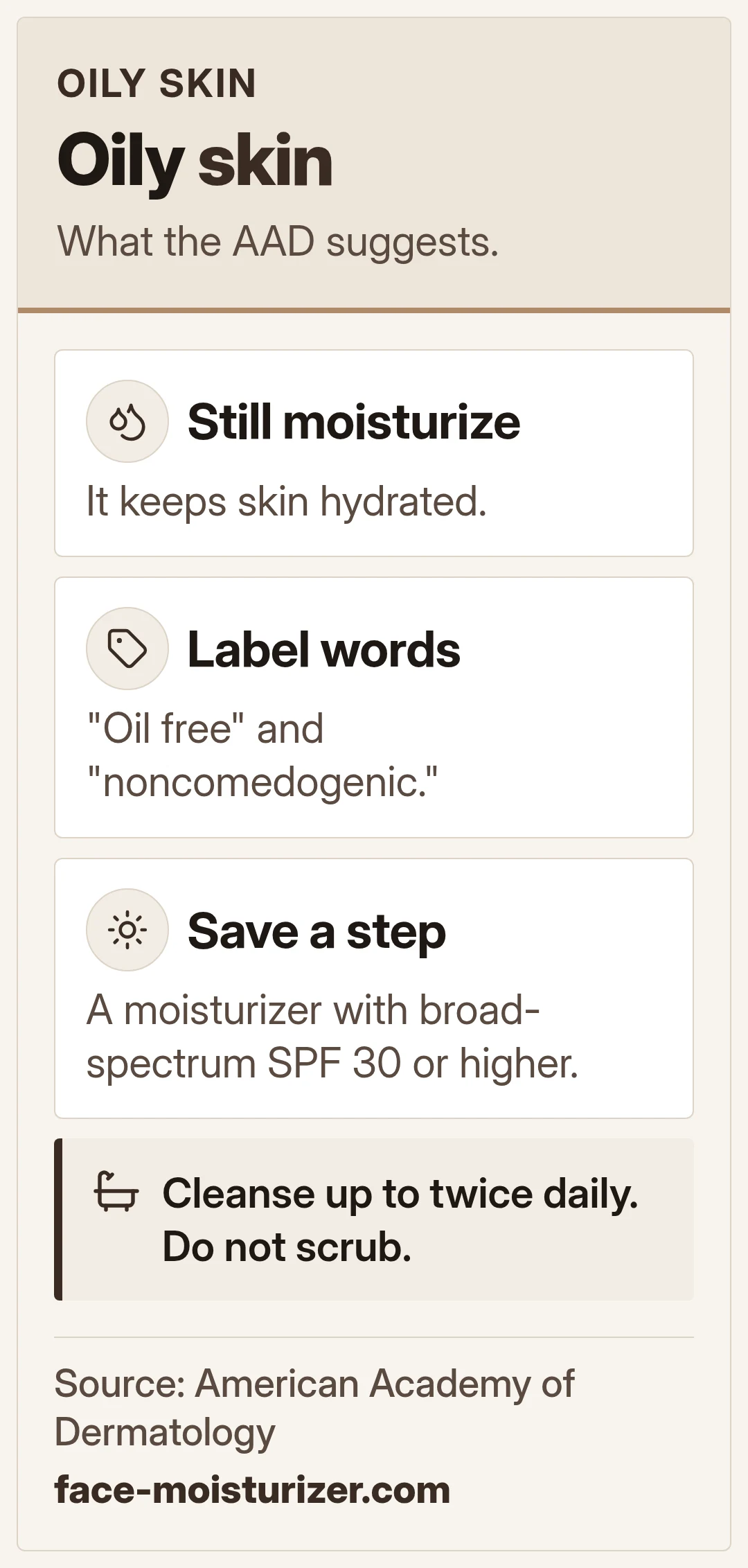
The AAD says that although you have oily skin, it is still important to apply moisturizer to keep your skin hydrated.
Labels the AAD names
The AAD suggests skin care products labeled "oil free" and "noncomedogenic." It says these labels mean a product won't clog your pores. We do not check any product's label claims.
A lighter texture
The AAD moisturizer guide says too much moisturizer can clog pores and lead to acne for some people. For oily skin, a dermatologist quoted in the guide suggests a gel, which is lighter, or skipping moisturizer.
Moisturizer with SPF
To save time, the AAD suggests a moisturizer that also contains a broad-spectrum sunscreen with an SPF of 30 or higher. Our guide to moisturizer with SPF explains how those products are labeled.
Wash without scrubbing
The AAD says to cleanse your face up to twice daily and after sweating, with a gentle, foaming face wash, and not to scrub. It says not to use oil-based or alcohol-based cleansers.
When to see a dermatologist
The AAD says there is no "one size fits all" approach to skin care. If you are concerned about the amount of oil your skin makes, or you are struggling with blackheads or acne, it suggests seeing a board-certified dermatologist.
FAQ
General information, not medical advice. Before you use a new skin care product on your face, the American Academy of Dermatology suggests testing it on a small spot of skin, such as the bend of your elbow, twice a day for seven to 10 days. If your skin reacts, wash the product off and do not use it again. Follow the directions and warnings on the label. See a doctor or dermatologist about a rash, a skin reaction that does not go away, or any skin condition. If you have signs of a severe allergic reaction, such as shortness of breath or trouble swallowing, call 911.
Next: hypoallergenic and noncomedogenic
Two label terms, explained.
