
Does moisturizer expire?
Shelf life, expiration dates, and storage, per the FDA.
Disclosure: We may earn a commission if you buy through links on this page. It does not change our guidance. Affiliate Disclosure
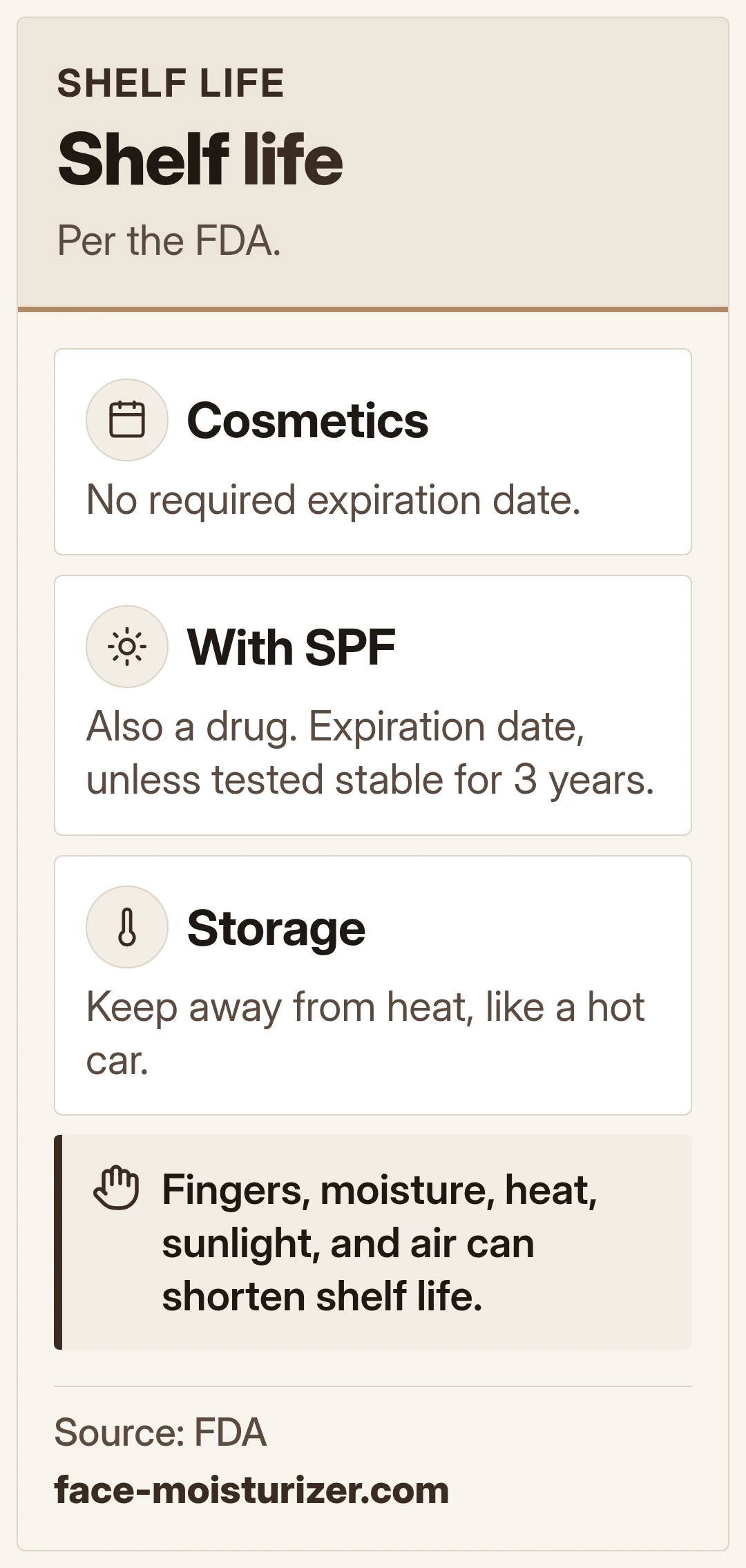
No required date for cosmetics
The FDA says "there are no U.S. laws or regulations that require cosmetics to have specific shelf lives or have expiration dates on their labels."
Moisturizers with SPF are different
The FDA says makeup and moisturizers that are also sunscreens, with "SPF" labeling, are regulated as both cosmetics and drugs. It says drugs, including those that are both, must be tested for stability and have expiration dates printed on their labels.
What shortens shelf life
The FDA says dipping fingers into a product adds microorganisms, preservatives can break down over time, emulsions of water and oil can separate, moisture such as in a bathroom may make it easier for bacteria and fungi to grow, and temperature changes, sunlight, and air can change color and texture.
Storage
The FDA says not to leave cosmetics where they are exposed to heat, such as in a hot car, because heat can make preservatives break down.
No date on a sunscreen?
The FDA says nonprescription drugs, including sunscreens, must have an expiration date unless the maker's stability testing has shown the product will remain stable for at least three years. It says a sunscreen that does not have an expiration date should be considered expired three years after purchase.
Resold products
The FDA says to be wary of products offered for sale at flea markets or resold over the internet, which may be past their shelf life, already used, diluted, or tampered with.
FAQ
General information, not medical advice. Before you use a new skin care product on your face, the American Academy of Dermatology suggests testing it on a small spot of skin, such as the bend of your elbow, twice a day for seven to 10 days. If your skin reacts, wash the product off and do not use it again. Follow the directions and warnings on the label. See a doctor or dermatologist about a rash, a skin reaction that does not go away, or any skin condition. If you have signs of a severe allergic reaction, such as shortness of breath or trouble swallowing, call 911.


Next: moisturizer with SPF
A cosmetic and a drug.
