
Cosmetic vs drug claims
Why the words on the jar decide which rules apply.
Disclosure: We may earn a commission if you buy through links on this page. It does not change our guidance. Affiliate Disclosure
Intended use decides
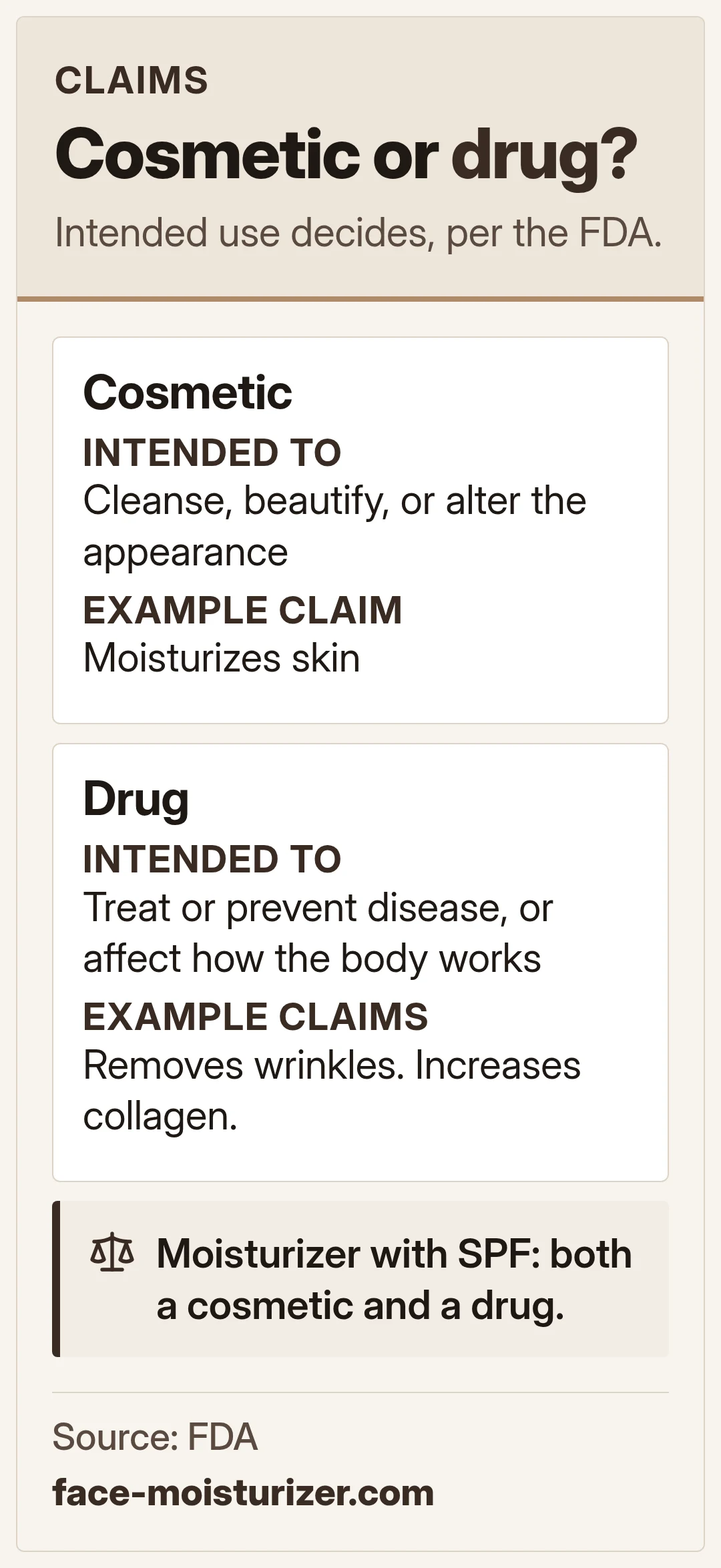
The FDA says whether a product is a cosmetic or a drug under the law is determined by its intended use. The law defines cosmetics as articles intended to be applied to the body "for cleansing, beautifying, promoting attractiveness, or altering the appearance," and the FDA lists skin moisturizers among them.
What makes it a drug
The law defines drugs, in part, as "articles intended for use in the diagnosis, cure, mitigation, treatment, or prevention of disease" and articles intended to affect the structure or any function of the body. The FDA says intended use can be shown by claims on a product's label, in advertising, or online.
Wrinkle claims
The FDA says moisturizing is a cosmetic claim, so a product intended to make lines and wrinkles less noticeable simply by moisturizing the skin is a cosmetic. It says a product intended to remove wrinkles or increase the skin's production of collagen is a drug or a medical device.
Both at once
The FDA says some products meet the definitions of both. It says moisturizers and makeup marketed with sun-protection claims are cosmetic and drug products that must comply with the requirements for both.
"Cosmeceutical" has no legal meaning
The FDA says the term "cosmeceutical" has no meaning under the law, and that the cosmetic industry uses the word for cosmetic products that have medicinal or drug-like benefits.
Approval
The FDA says cosmetic products and ingredients, other than color additives, do not require FDA approval before they go on the market. It says drugs must generally receive premarket approval or conform to a monograph, such as the one for sunscreens.
FAQ
General information, not medical advice. Before you use a new skin care product on your face, the American Academy of Dermatology suggests testing it on a small spot of skin, such as the bend of your elbow, twice a day for seven to 10 days. If your skin reacts, wash the product off and do not use it again. Follow the directions and warnings on the label. See a doctor or dermatologist about a rash, a skin reaction that does not go away, or any skin condition. If you have signs of a severe allergic reaction, such as shortness of breath or trouble swallowing, call 911.
The FDA says moisturizers and makeup marketed with sun-protection claims are both cosmetics and drugs. Follow the directions and warnings on the product's Drug Facts label. The FDA says to ask a doctor before applying sunscreen to children under six months of age.

Next: moisturizer with SPF
A cosmetic and a drug.
